How Big Is a 20L Backpack? See Dimensions & What It Holds
This post contains affiliate links. As an Amazon Associate, we earn from qualifying purchases.
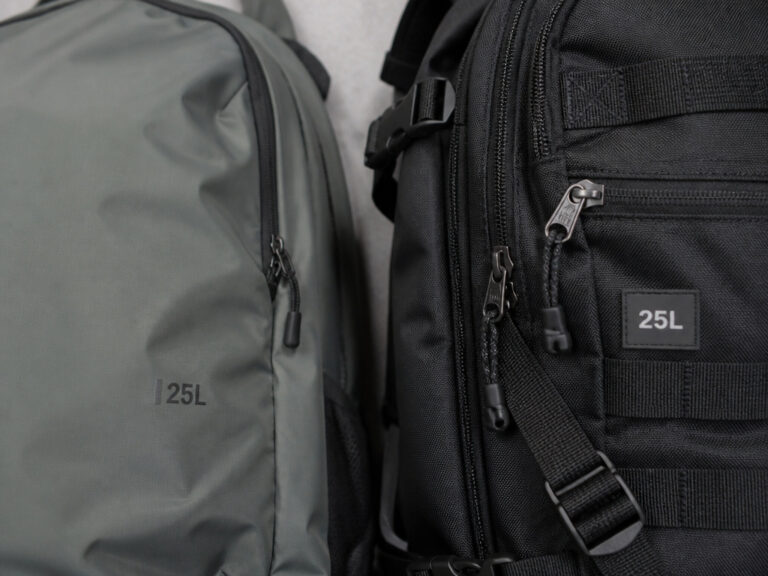
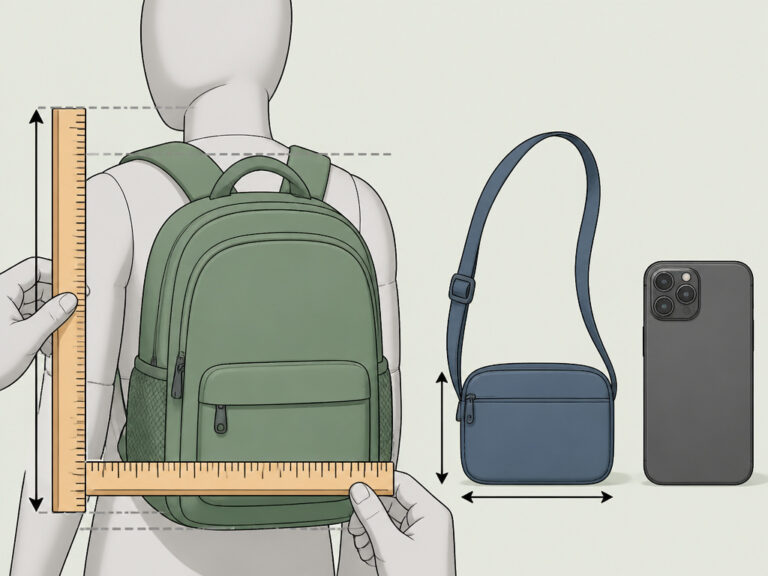
A 20-liter backpack is a daypack sized for essentials, not bulk. Its external dimensions typically range from 17 to 19 inches tall, 10 to 12.5 inches wide, and 4.5 to 8 inches deep, but the shape and pocket layout change what you can actually carry. The liter rating measures internal capacity, usually the main compartment alone.
That gap between the volume number and the physical footprint is where people buy the wrong bag. A tall, slim 20L pack carries a laptop and files neatly. A short, deep 20L pack swallows a gym kit but won’t fit under an airplane seat the same way.
What follows: the exact dimensions from five manufacturer spec sheets, what a 20L main compartment actually holds for school or a day trip, and the two design choices that make one 20L backpack feel cavernous and another feel tight.
Key Takeaways
- 20L is not a standard size. The external dimensions vary by over 2 inches in each direction between models like the slim Topo Designs Rover Pack and the boxy Able Carry Daily.
- The liter rating usually excludes external pockets. A pack’s total usable space is often 22-25L when you count bottle holders and admin panels.
- It’s a one-bag daypack, not a travel pack. A 20L backpack fits a 16″ laptop, a lunch, a light jacket, and a water bottle. It won’t fit a full change of clothes, shoes, and a toiletry kit comfortably.
- Panel loaders feel bigger than top-loaders. A clamshell-opening 20L backpack like the Trakke Storr lets you pack flat items efficiently, while a top-loader wastes space on awkwardly shaped gear.
- Check the airline’s personal item sizer. Most 20L backpacks will fit, but bags taller than 18 inches or deeper than 8 inches might get flagged on strict budget carriers.
How 20 Liters Is Measured (And Why It’s Fuzzy)
Manufacturers use a standard method to measure volume, but they don’t all measure the same compartments. Decathlon explains their process clearly: they fill the main compartment and every pocket with small balls, then pour those balls into a graduated container to get the liter equivalent.
Decathlon notes that the volume of each backpack is measured using a standard method: we fill the main compartment, as well as each pocket, with little balls. Then, we empty these balls into a graduated container, which gives the equivalent volume in litres.
That’s the ideal. In practice, many brands only count the main compartment’s capacity toward that 20L number. Pockets for water bottles, laptops, and quick-access organization are bonus space. The Trakke Storr 20L travel backpack explicitly includes its front pocket in the total volume, which is a notable exception. The Boblbee GTX 20L lists a volume range of 15-20L, showing that some designs have flexible capacity.
This means two backpacks both labelled 20L can have drastically different total carrying space. One might be a 20L main compartment with 5L of external pockets. The other might be an 18L main compartment with a 2L front pocket, marketed as a 20L total. You have to read the spec sheet.
The Db Hugger vs. Able Carry Daily: A Shape Comparison
Look at the numbers. The Db Hugger measures 17.71” H x 10.6” W x 6.5” D externally. Its main compartment is 15” H x 10” W x 6” D. The Able Carry Daily is larger outside: 19” H x 12″ W x 7.5” D, but its main compartment is actually narrower at 18.5” H x 11.5” W x 5” D.
The Able Carry is taller and wider, giving it a larger exterior profile. Its main compartment is shallower, which shapes it for flat items like laptops and notebooks. The Db Hugger is more cube-like. It can fit a bulkier item like a packed lunch box or a small pair of shoes more easily. Both are 20L backpacks.
| Model | External Dimensions (HxWxD) | Main Compartment Dimensions (HxWxD) | Best For |
|---|---|---|---|
| Db Hugger 20L | 17.71” x 10.6” x 6.5” | 15” x 10” x 6” | Carrying cube-shaped items, lunch, small shoes. |
| Able Carry Daily | 19” x 12” x 7.5” | 18.5” x 11.5” x 5” | Carrying flat tech: laptops, tablets, folders. |
| Topo Designs Rover Pack | 17” x 11” x 4.5” | 16.8” x 10.8” x 4” | Minimal daily carry, avoiding bulk. |
The takeaway is that you cannot shop by liters alone. You need the three dimensions. A pack that is 18 inches tall or less has a better chance of fitting under an airplane seat without jutting into your footspace. A pack deeper than 7 inches might not fit a budget airline’s personal item sizer.
The Thule Lithos Spec Sheet: A 20L Blueprint
For a complete picture, look at a full manufacturer datasheet. The Thule Lithos Backpack 20L spec sheet gives internal and external dimensions, which is rare and useful.
EXTERNAL DIMS: 11.0 x 8.3 x 17.3 in (28.0 x 21.0 x 44.0 cm) INTERNAL DIMS: 15.2 x 0.94 x 10.4 in (38.5 x 3.1 x 26.5 cm) PRODUCT WEIGHT: 1.61 lbs / 0.73 kg PRODUCT VOLUME: 1221 cu in / 20 L
Notice the internal depth is only 0.94 inches. That’s not a mistake—it shows the main compartment is designed for slim cargo. The external depth of 8.3 inches includes the padded back panel and the front organizational pocket. This pack is built for a laptop, a tablet, books, and a few small accessories. It won’t handle a thick winter coat.
This is the level of detail that matters. The Osprey Talon Pro 20 has similar specs: 22h x 11w x 9d inches externally, with a load range of 10-20 pounds. These numbers tell you the pack is designed for active, weighted carry, not just urban commuting. The 30-liter backpack from the same series shares the same depth, just gaining height and width.
What Fits in a 20L Backpack? Real-World Loadouts
People overestimate capacity. A Reddit user looking for a bag between a 3L sling and a 20L backpack summed it up: a standard 20L backpack felt “way too bulky and mostly empty” for their kit of an e-reader, handheld console, notebook, and small tools. They were right. That loadout needs about 9 liters, which is why the Bellroy Venture 9L sling was the community’s top recommendation.
A 20L main compartment is for a primary load, not a few small items. Here is what it handles well, and where it strains.
The School and Work Load (The Sweet Spot)
For a student or commuter carrying tech and basics, a 20L backpack is the default. It fits: * A 16-inch laptop in a padded sleeve. * A 10.5-inch tablet or a large notebook. * A lunch box or small container. * A light sweater or rain jacket. * A standard folder or two. * Small accessories in an organization pocket (pens, cables, power bank).
It struggles with: * Multiple large, thick textbooks. * A full-sized binder plus a laptop plus lunch. * A change of clothes and gym shoes and your work tech.
If your daily carry is tech-heavy, a 20L pack is perfect. If you haul multiple large books, you need a 25-liter backpack or larger. The jump from 20L to 25L is often just an extra 2 inches in height, which is enough for those tall textbooks.
The Gym and Day Trip Test
For the gym, a 20L pack is light-duty. It holds: * A pair of training shoes (size 10 men’s or below). * A change of clothes (t-shirt, shorts, socks). * A small toiletry kit. * A water bottle in a side pocket. * A towel (packed thin).
It fails at: * Shoes and a full outfit and a large water bottle and a foam roller. Pick two. * Boxing gloves or other bulky sports gear.
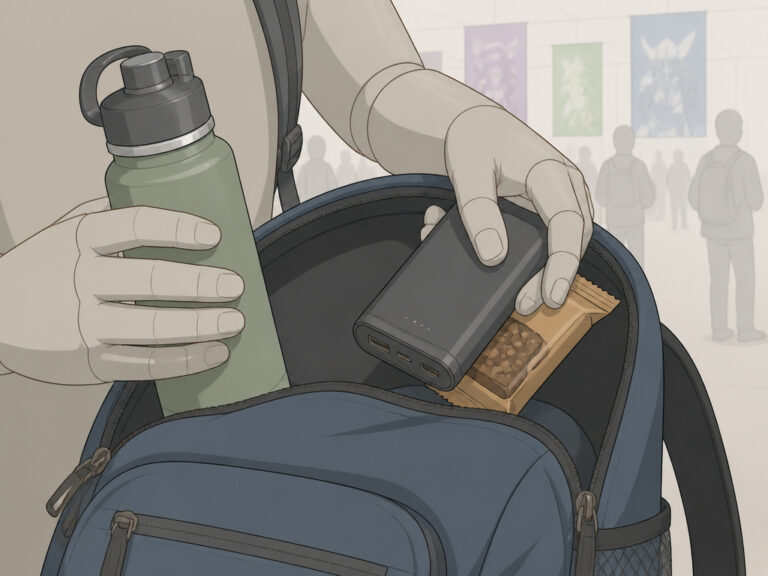
For a day trip to a park or city, it’s ideal. The Disneyland daypack request from Reddit asked for 16-20L to carry wallets, a portable charger, a 32oz water bottle, neck fans, and light jackets. A 20L backpack does that comfortably. The Osprey Daylite Plus is a frequent recommendation because it’s breathable, has external bottle pockets, and meets the size limit for theme park rides.
Where this goes sideways: Packing a 20L backpack for a weekend. You can do a one-night trip with careful packing cubes, but you’ll wear the same shoes. For a true weekend bag, you need a 35-liter travel backpack at minimum.
20L Backpacks and Airline Rules: Will It Fit?
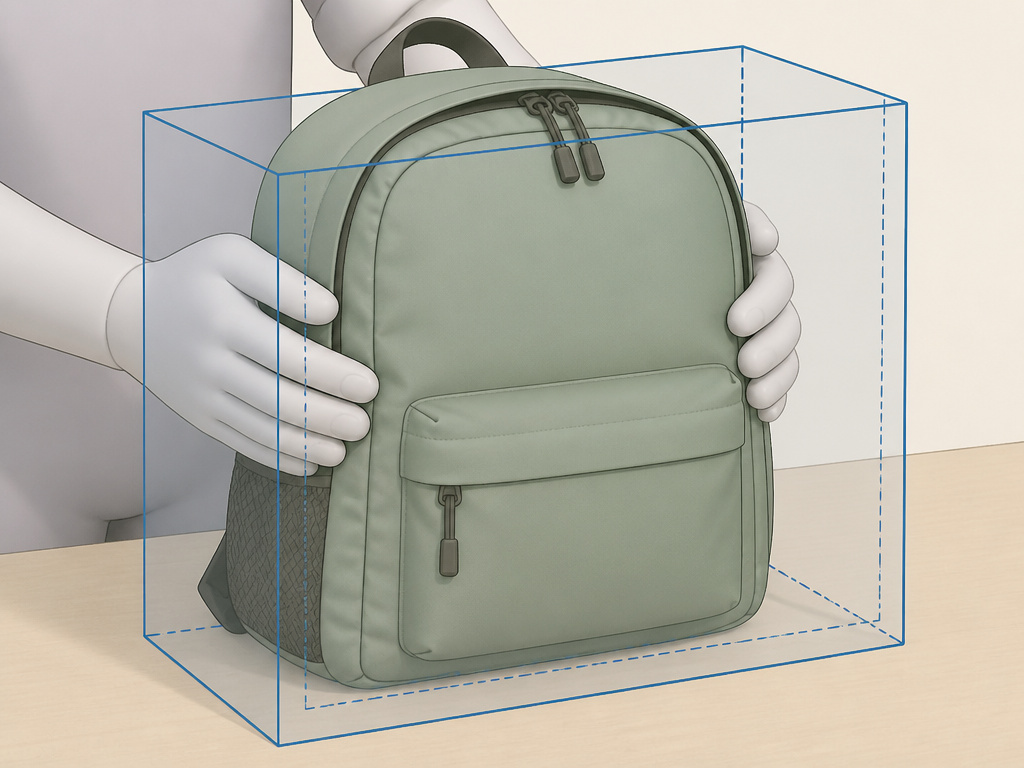
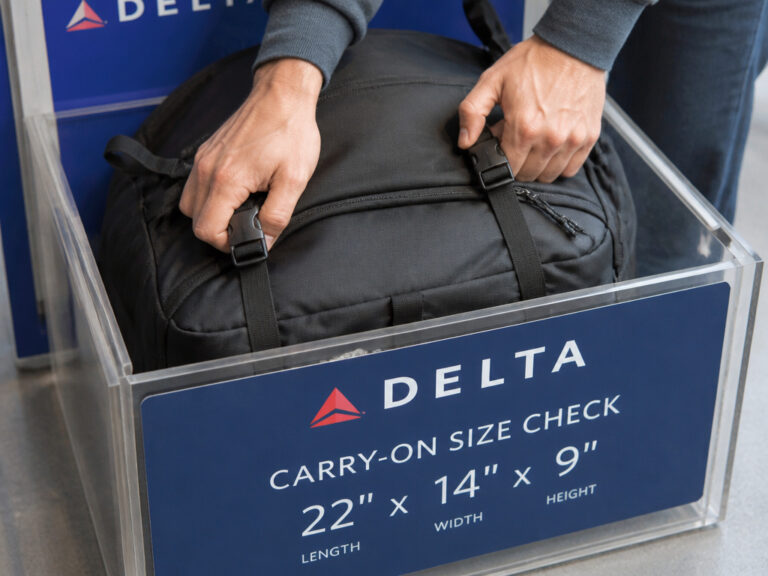
Most 20L backpacks are designed to be personal items, not carry-on luggage. The critical check is against the sizer boxes used by budget airlines like Frontier, Spirit, and Ryanair.
Their typical personal item dimensions are 18 x 14 x 8 inches. Compare that to our example packs: * Thule Lithos 20L: 17.3″ H x 11″ W x 8.3″ D. The depth is 0.3 inches over. It might need a gentle squeeze. * Able Carry Daily: 19″ H x 12″ W x 7.5″ D. The height is 1 inch over. This is a risk. * Db Hugger 20L: 17.71″ H x 10.6″ W x 6.5″ D. This fits easily.
A bag that fits under the seat in front of you on a major airline (Delta, American, United) is not guaranteed to fit a budget airline’s sizer. The rules for bringing a backpack on a plane are airline-specific. If you frequently fly budget carriers, choose a 20L model that is under 18 inches tall and 8 inches deep. This ensures you can keep your backpack with you in the cabin without paying a gate-check fee.
If you need to check a backpack as luggage, a 20L pack is fine but inefficient—you’re paying to check a very small bag. It’s better used as your in-cabin bag alongside a larger rolling carry-on.
Choosing Your 20L Backpack: Panel Loader vs. Top Loader
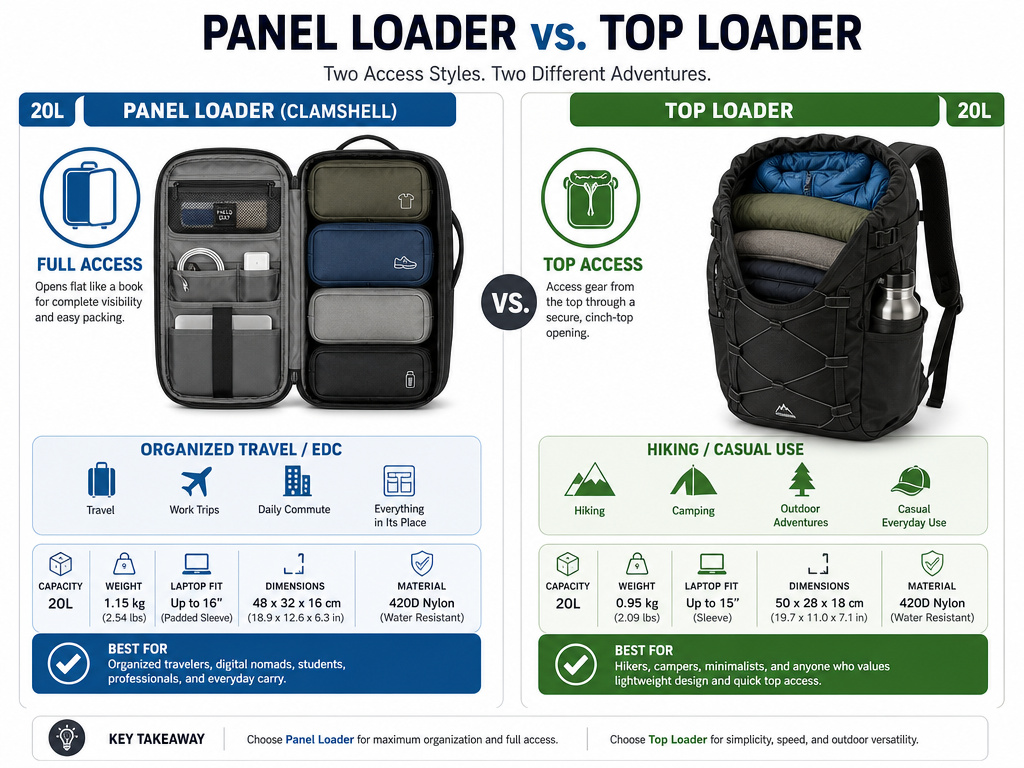
The final decision is about access. This is the difference between a bag that feels spacious and one that feels like a black hole.
Panel Loaders (Clamshell Openers): Like the Trakke Storr 20L or a travel backpack, these open like a suitcase. You see everything at once. Packing cubes lie flat. It’s easy to find the item at the bottom. This design maximizes usable space for organized travel and EDC.
Top Loaders: Like the Osprey Talon Pro 20 or many hiking daypacks, these have a single opening at the top. You pack items in layers. They are more secure against weather and pickpockets, but you have to unpack everything to reach something at the bottom. They work best for loose, soft gear like clothing and jackets.
For urban use—commuting, school, tech carry—a panel loader is superior. For hiking or casual use where organization is less critical, a top-loader is simpler and often lighter.
| Access Type | Best Use Case | Packing Efficiency | Example Model |
|---|---|---|---|
| Panel Loader | Commuting, tech, travel, organized EDC | High. Cubes and flat items pack fully. | Trakke Storr 20L |
| Top Loader | Hiking, gym, casual day use | Medium. Wastes space on rigid items. | Osprey Talon Pro 20 |
| Hybrid (Top + Front) | School, work with need for quick access | Medium-High. Main compartment is top-loading. | Thule Lithos 20L |
If you want one answer for a clean, organized daily carry: a panel-loading 20L backpack. The clamshell opening ends the digging. For everything else, the classic top-loader is still a reliable, often more affordable, choice.
Frequently Asked Questions
Is a 20L backpack a personal item or carry-on?
20L backpack is almost always a personal item. Its dimensions are designed to fit under the airplane seat in front of you. To be certain, verify that your specific model’s height is under 18 inches and its depth is under 8 inches to pass strict budget airline sizers.
How many clothes can you fit in a 20L backpack?
You can fit one to two days of minimalist clothing in a 20L backpack using packing cubes. Think: two t-shirts, two pairs of socks and underwear, one pair of shorts or pants, and a light layer. There will be no room for extra shoes or bulky items like a jeans jacket.
Is 20L enough for a high school backpack?
For a student who carries a laptop, a couple of notebooks, a folder, and a lunch, a 20L backpack is sufficient. For a student who needs to carry multiple large textbooks, heavy binders, and a laptop every day, it’s too small. They should look at a 26-liter backpack for that load.
What is the actual size of a 20L backpack in inches?
There is no single size. External dimensions commonly range from 17-19 inches tall, 10-12.5 inches wide, and 4.5-8 inches deep. You must check the spec sheet for the specific model, like the Thule Lithos (17.3″x11″x8.3″) or the Deuter Trail 20 SL (21.3″x11″x7.1″).
Can you use a 20L backpack for hiking?
Absolutely. Many dedicated hiking daypacks, like the Osprey Talon Pro 20 or the Deuter Trail 20 SL, are 20 liters. This size is perfect for short day hikes carrying water, snacks, a first-aid kit, a light jacket, and a camera. For longer hikes requiring more gear or layers, a 22-liter backpack or larger is a safer bet.
Before You Go
A 20L backpack is a tool for curated daily carry, not a cavern for everything you own. Its value is in constraint. Match the internal shape to your cargo—slim for tech, cube-shaped for gym gear. Confirm the external dimensions against your airline’s rules if you travel often.
The difference between a good 20L pack and a great one is in the details: a sternum strap for comfort, a luggage pass-through for travel, and a material that can handle your daily grind. Don’t buy the generic “20L backpack.” Buy the Thule Lithos for clean organization, the Osprey Talon for the trail, or the Db Hugger for a simple, sturdy carry. Know what you’re putting in it, and the right size will be obvious.